Work & Settle in Lithuania

Lithuania is rapidly emerging as one of Europe’s most exciting destinations for skilled professionals. As a proud EU member state, Lithuania offers foreign workers a direct pathway to European residency, a thriving tech economy, and one of the fastest-growing job markets in the Baltic region. With Visthara, your journey to Lithuania starts with a plan built just for you.

- Why Lithuania

A country built for opportunity

Lithuania stands among the fastest-growing economies in the EU, powered by a booming technology sector, a strong manufacturing base, and an open-door approach to skilled migration. From Vilnius to Klaipėda, Lithuania offers professionals a high quality of life, competitive salaries, and a welcoming international community.

€2,527+

Average Monthly Gross Salary

Skilled professionals in IT, finance, and engineering earn well above the national average, with senior roles exceeding €4,000/month.

24,700+

Annual Work Quota Slots

Lithuania allocates over 24,700 spots annually for non-EU skilled workers, with priority given to high-value professionals outside the quota system.

Top 20

EU Quality of Life Ranking

Lithuania consistently ranks among the top EU nations for digital infrastructure, safety, and ease of living for expats and immigrant professionals.

EU Member

Since 2004

As a full EU member state, a Lithuanian residence permit unlocks the right to live, work, and travel freely across the European Union.

Visa Categories

Find the right pathway for you

Lithuania offers some of the most streamlined and accessible work visa options available in the EU. Whether you are a highly skilled professional, an employer-sponsored worker, or looking to establish permanent ties in Europe, Lithuania’s immigration system provides a clear and structured pathway tailored to your profile and goals.

National Visa (Type D)

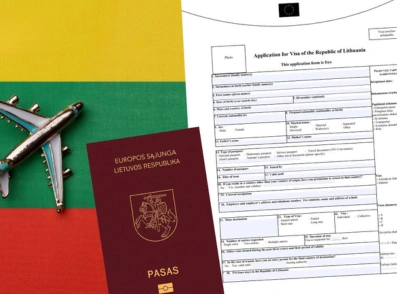
Lithuania's National Long-Term Visa (Type D) allows non-EU professionals to enter and legally reside in Lithuania for up to 12 months. It is the most common entry-level visa for employment and is typically sponsored by a Lithuanian employer, making it the first step for most foreign workers entering the country.

Work Permit (Labour Market Assessment)

Before hiring a non-EU worker, Lithuanian employers must obtain a work permit from the Lithuanian Employment Service (Užimtumo tarnyba – UŽT). This assessment confirms the job role cannot be filled locally and verifies that the proposed salary meets the national threshold, ensuring fair employment standards for international workers.

Temporary Residence Permit

The Temporary Residence Permit (TRP) is issued for workers planning to stay in Lithuania beyond 12 months. It is tied to your employment contract and can be renewed. TRP holders enjoy access to healthcare, banking, and social services, and it serves as the foundation for long-term settlement in Lithuania.
EU Blue Card

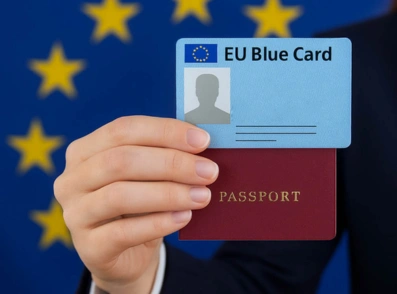
The EU Blue Card is Lithuania's fast-track route for highly qualified professionals. Applicants must hold a university degree and be offered a salary of at least 1.2 times the national average (currently €2,667.60/month). Blue Card holders are exempt from the annual work quota and benefit from a simplified, priority application process.

Intra-Company Transfer

If you are already employed within a multinational company, Lithuania's Intra-Company Transfer (ICT) permit allows your employer to relocate you to their Lithuanian branch or subsidiary. This is ideal for managers, specialists, and trainee employees being seconded to Lithuania for project-based or long-term assignments.
Permanent Residence Permit

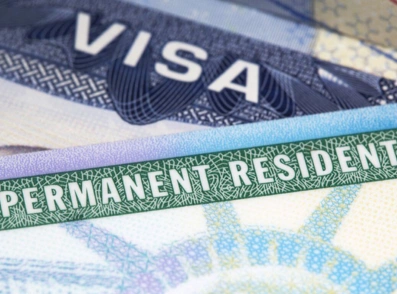
After residing legally in Lithuania for five continuous years, foreign nationals become eligible for a Permanent Residence Permit. This provides unrestricted work rights, full access to social benefits, and the ability to live in Lithuania indefinitely — serving as the final step before potential EU citizenship.

In-Demand Industries in Lithuania

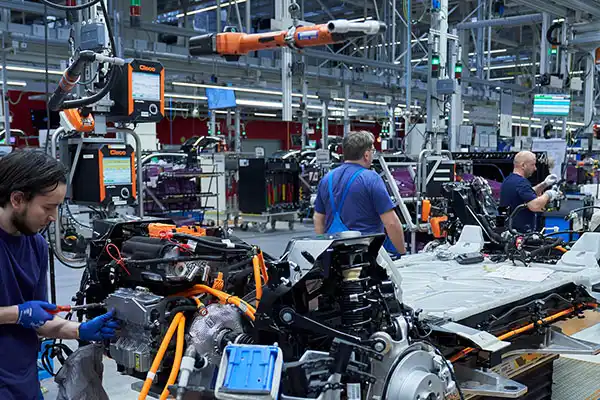
Lithuania is attracting significant global talent across multiple industries, driven by strong economic growth and rapid expansion in the tech and manufacturing sectors. These industries offer exceptional opportunities for skilled foreign workers to find quality, well-paying employment with a clear route to long-term residency.

Automotive, Aeronautics & Mobility

Catering & Hospitality

Construction

Energy

Financial Institutions & Consulting

Food & Beverage

Healthcare

Logistics & Transport

Manufacturing

Public Services & Administration

Retail Sales & Services

Technology

Our Process

How Visthara gets you there

Navigating a foreign country’s immigration system can feel overwhelming when you are also searching for a job at the same time. Visthara’s step-by-step system removes that complexity by personally guiding you through every step of the process in your favour.
Step 1

Profile Assessment

We thoroughly review your educational background, work experience, language skills, and career goals to identify the most suitable visa category and employment pathway for you in Lithuania.

Step 2

Job Matching

We connect you directly with verified Lithuanian employers who are actively recruiting foreign talent. Our job-matching network spans hundreds of companies across all major industries in Vilnius, Kaunas, and Klaipėda.

Step 3

Visa Guidance

We provide you with step-by-step guidance on every stage of the Lithuanian visa and work permit process from work permit applications with the Employment Service to National Visa or TRP submissions — ensuring no detail is missed.

Step 4

Documentation Support

Our dedicated team helps you compile, verify, and correctly submit all required documents employment contracts, qualification certificates, police clearance, medical reports, and more to avoid delays or rejection.

Step 5

Post-Landing Support

Our support does not end at the airport. We help you register with Lithuanian authorities, open a bank account, locate accommodation, and settle into your new professional life in Lithuania with confidence.

Checklist

Documents you'll need

Prepare these documents early to avoid delays in your application process.

Canada is facing significant labour shortages across multiple industries, driven by an ageing population and rapid economic growth. This creates exceptional opportunities for skilled foreign workers to find stable, well-paying employment with a direct route to permanent residency.

Valid passport

Minimum 2 years validity from the date of application

Valid passport

All degrees, diplomas, and academic records may require ECA evaluation

Work experience reference letters

On company letterhead, confirming role, duties, salary, and tenure

Language test scores (IELTS / CELPIP)

Results must be within 2 years of the application date

Medical examination report

Conducted by an IRCC-approved panel physician

Police clearance certificate

Required from every country where you have lived for 6+ months

Job offer letter (if applicable)

Employer-signed offer on company letterhead, specifying role and salary

Bank statements (proof of funds)

Minimum 2 years validity from the date of application

Updated CV / Resume

Canadian-format resume highlighting all relevant skills and experience

Photographs (passport size)

Recent photos meeting IRCC specifications for size and background

Common Questions About Lithuania

We know you may have unanswered questions before starting your Lithuania journey, so we’ve answered the most common questions our clients have. For more personalised advice about working and settling in Lithuania, our visa experts are ready to assist.
  • How long does it take to get a work permit in Lithuania?
    The Lithuanian Employment Service typically processes work permit applications within 7 working days. Once approved, your employer will receive a decision letter, and you can then apply for your National Visa (Type D) or Temporary Residence Permit at your nearest Lithuanian embassy or consulate. Total processing can range from 4 to 12 weeks depending on your country of application and document readiness.
  • Do I need a job offer to apply for a Lithuanian work visa?
    Yes. Lithuania's work visa system is employer-sponsored, meaning you must have a confirmed job offer from a registered Lithuanian company before your work permit application can be submitted. Your employer initiates the process on your behalf through the Lithuanian Employment Service. Visthara helps you find and secure that job offer before the visa process begins.
  • What is the employment quota and does it affect me?

    Lithuania sets an annual quota for non-EU work permit applications. For 2026, there are approximately 24,706 quota slots available. Highly qualified professionals (HQPs), EU Blue Card applicants, researchers, and lecturers are exempt from this quota, allowing them to apply at any time regardless of availability. Visthara monitors quota status to time your application optimally.

  • Can my family accompany me to Lithuania?

    Yes. Once you hold a valid Temporary Residence Permit, your spouse and dependent children may apply for a family reunification residence permit to join you in Lithuania. They are entitled to reside legally in the country and access public services, including education and healthcare, while you are employed there.

  • What is the minimum salary required to qualify for a work permit?
    Your offered salary must meet at least the average monthly gross wage, currently set at €2,223 for standard positions. For EU Blue Card eligibility or quota-exempt processing, your salary must be at least €2,667.60 per month — equivalent to 1.2 times the national average. Visthara verifies that your job offer meets these thresholds before submission.
  • How does Visthara help with job placement in Lithuania?
    Visthara maintains an active network of verified Lithuanian employers across IT, manufacturing, construction, logistics, and hospitality. We match your skills and experience to open vacancies, prepare your profile for international employers, and support you through interview preparation — significantly increasing your chances of receiving a qualifying job offer.
  • Will my foreign qualifications be recognised in Lithuania?
    Lithuania recognises professional qualifications from most countries, though some regulated professions (such as medicine, law, and engineering) may require formal credential validation through the Centre for Quality Assessment in Higher Education (SKVC). Visthara advises you on whether your qualification requires recognition and assists with the process where needed.